
Find the ESG topics that matter, with rigor you can defend.
terra-dma guides you through the entire double materiality process, automating data collection and IRO identification to map your most important ESG topics.
Double materiality, in brief.
terra-dma guides you through the entire double materiality process. It automates data collection and IRO identification to map out your most important ESG topics.
Impact materiality
How your business affects people and the environment.
Financial materiality
How sustainability issues affect your finances.
IROs
Impacts, risks and opportunities identified for each issue, then scored on both lenses.
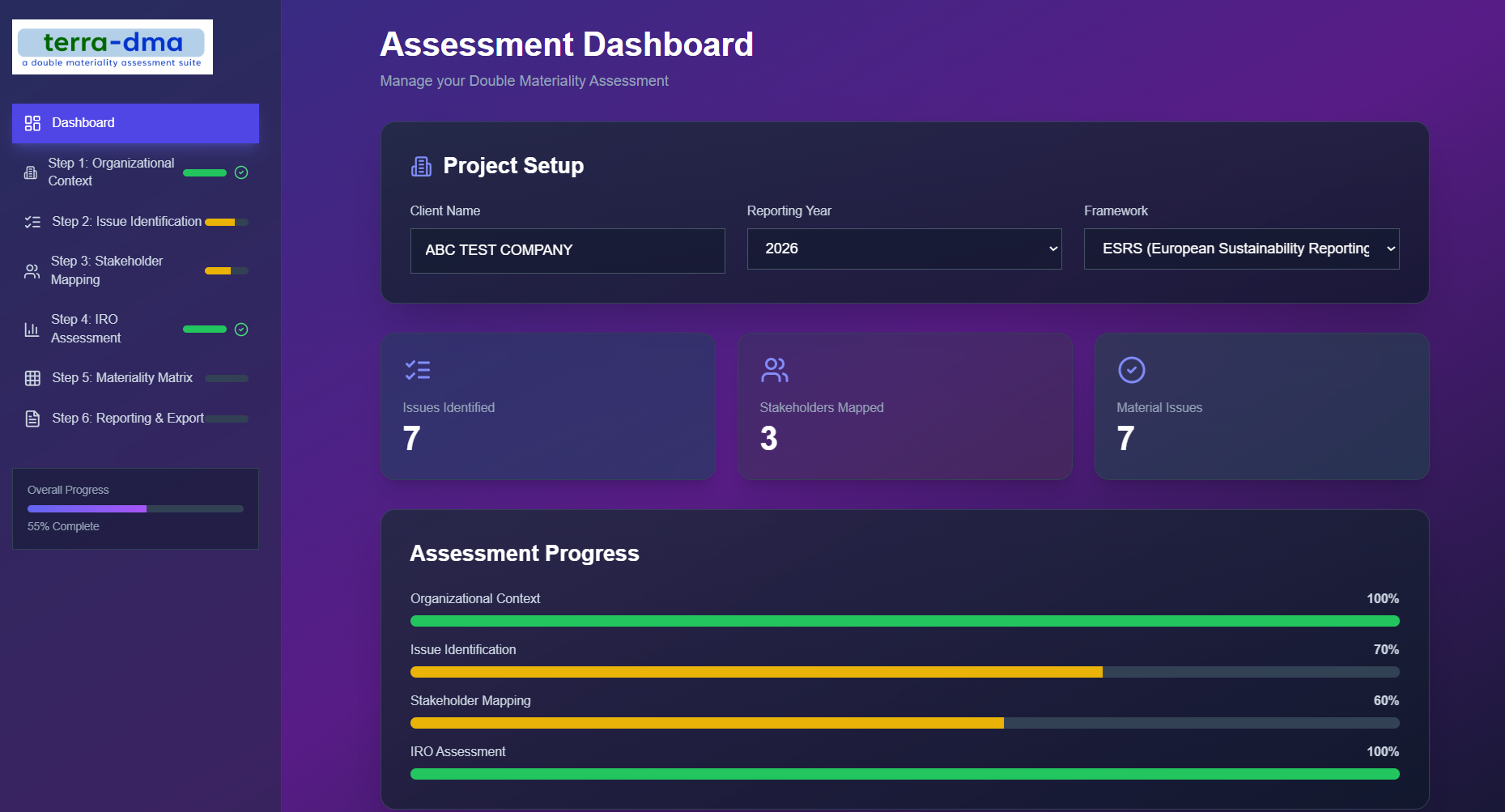
Six steps from context to export.
A workflow-driven process replaces scattered spreadsheets with one standardized, logic-based framework.
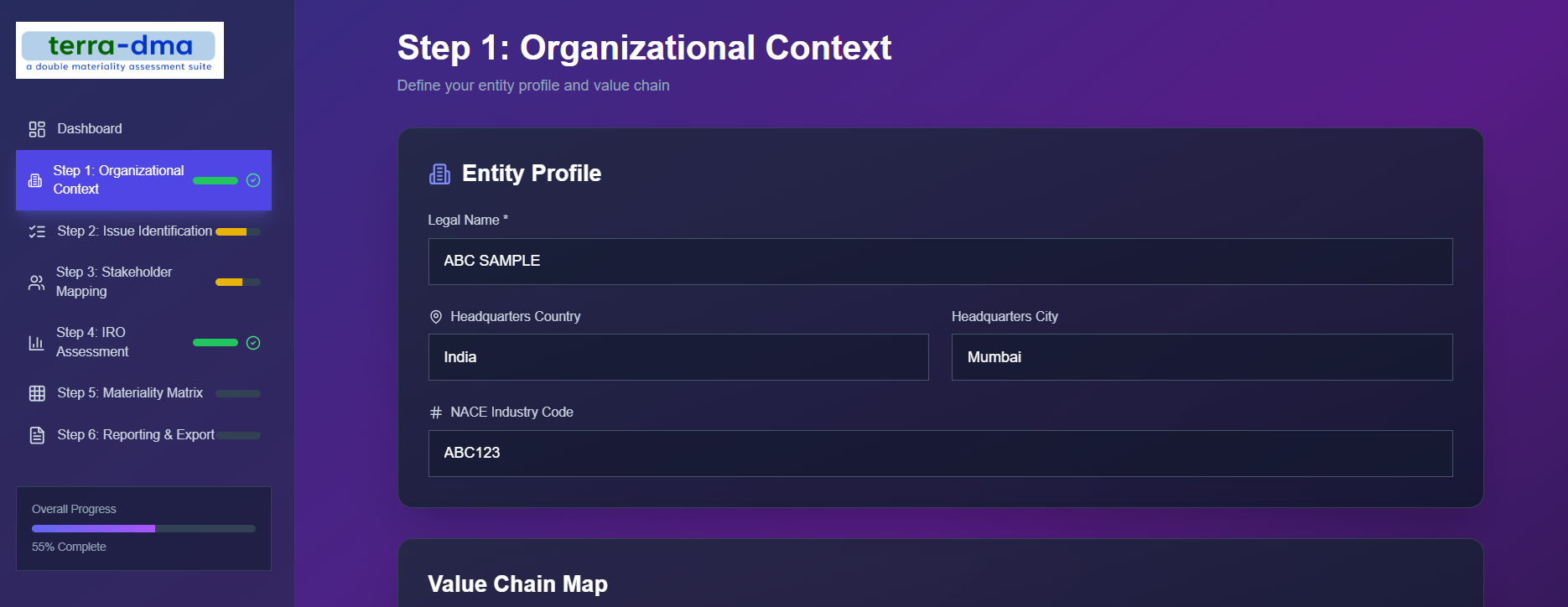
Organizational context
Define your entity profile and value chain.
- Entity profile: legal name, headquarters and industry code
- Value chain map, so impacts and risks beyond your own operations are in scope
- Progress tracked across all six steps
Issue identification
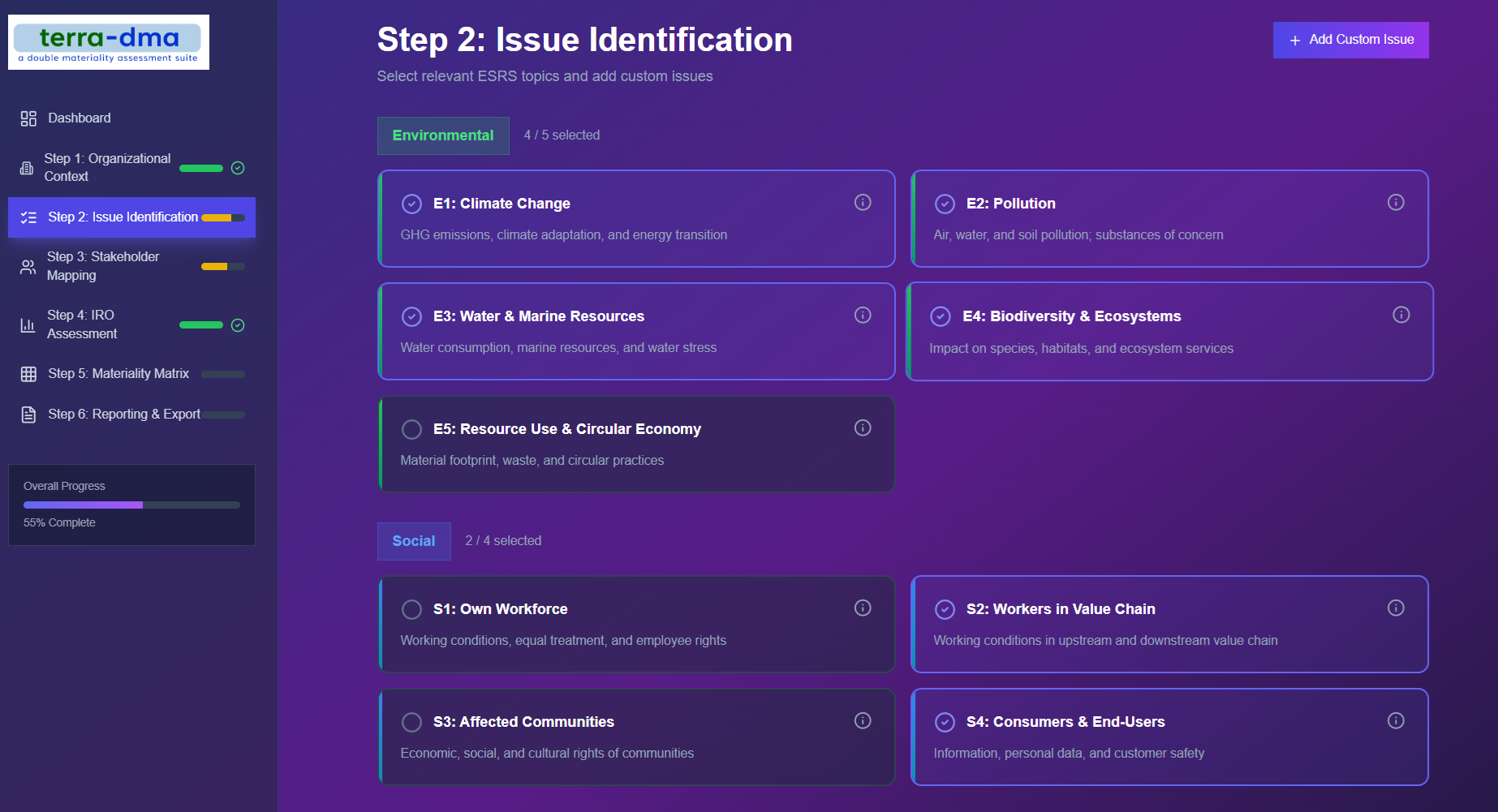
Select the relevant ESRS topics and add your own.
- Environmental and social topics, such as climate change, pollution, water, biodiversity and own workforce
- Selection counts per category show coverage at a glance
- Add custom issues for topics specific to your business
Stakeholder mapping
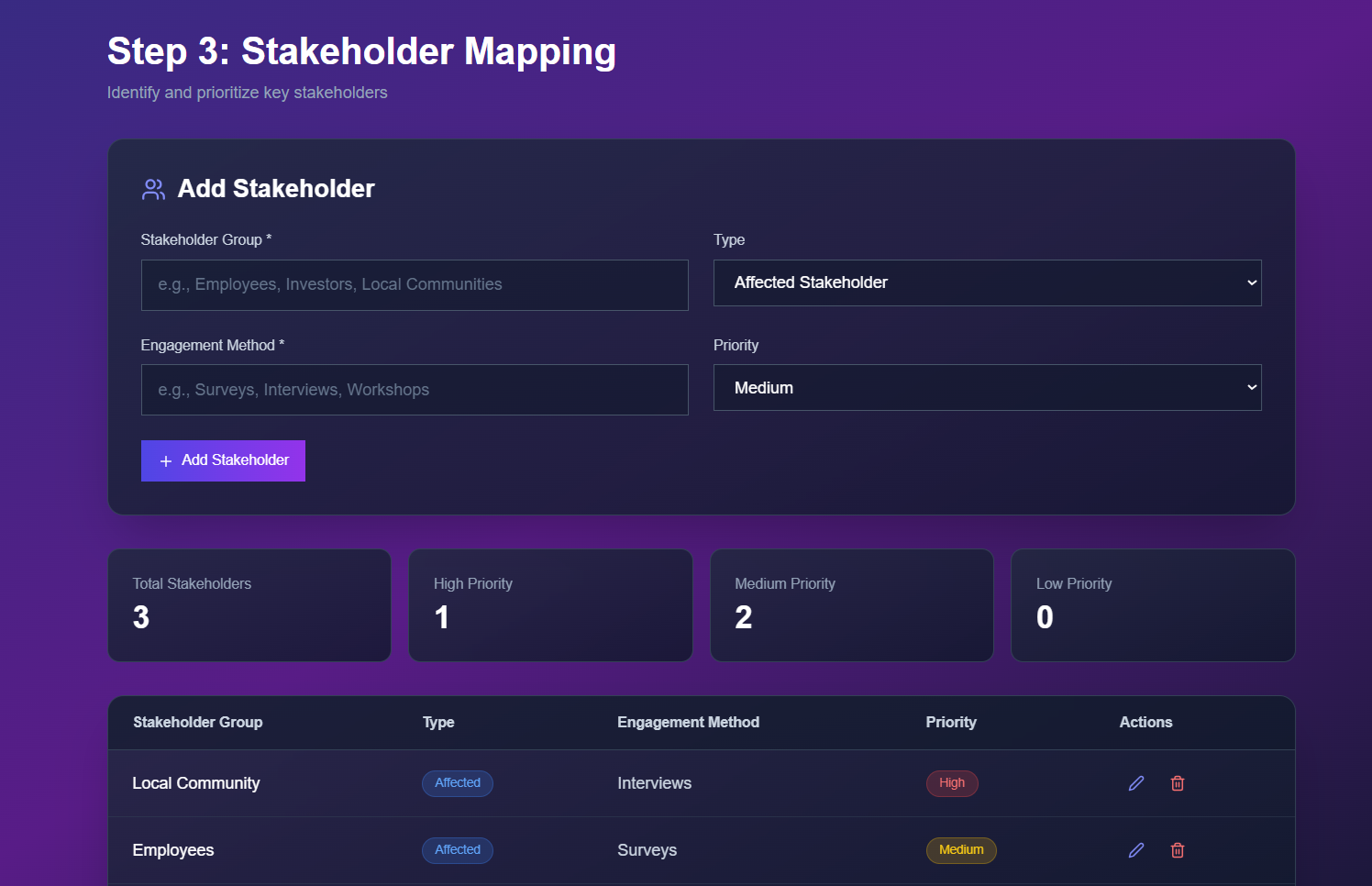
Identify and prioritize the stakeholders whose views shape the assessment.
- Record each group, its type and how you engage it, such as surveys, interviews or workshops
- Prioritize as high, medium or low
- Summary counts by priority, editable as engagement proceeds
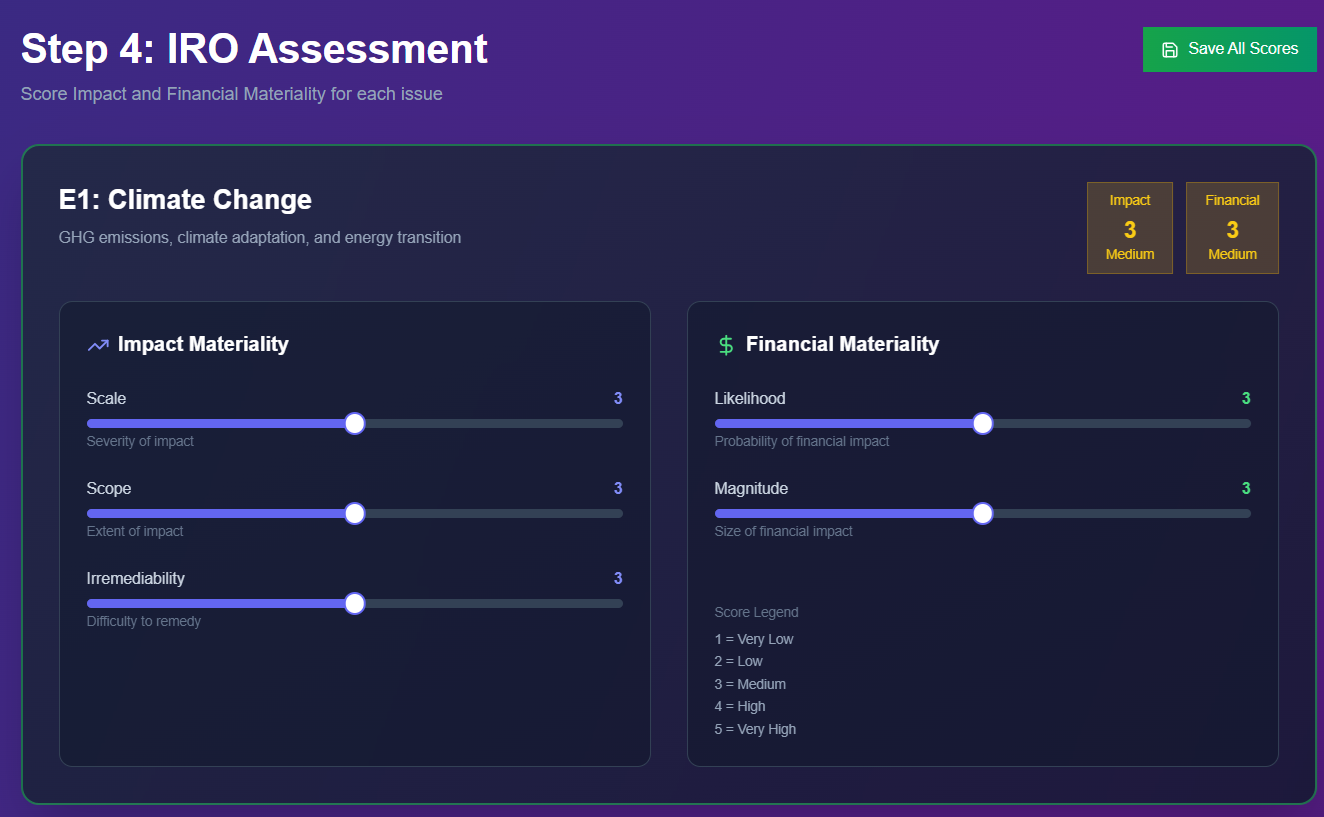
IRO assessment
Score impact and financial materiality for each issue.
- Impact materiality: scale, scope and irremediability
- Financial materiality: likelihood and magnitude
- A 1–5 scale with a clear legend, rolled up into an impact score and a financial score
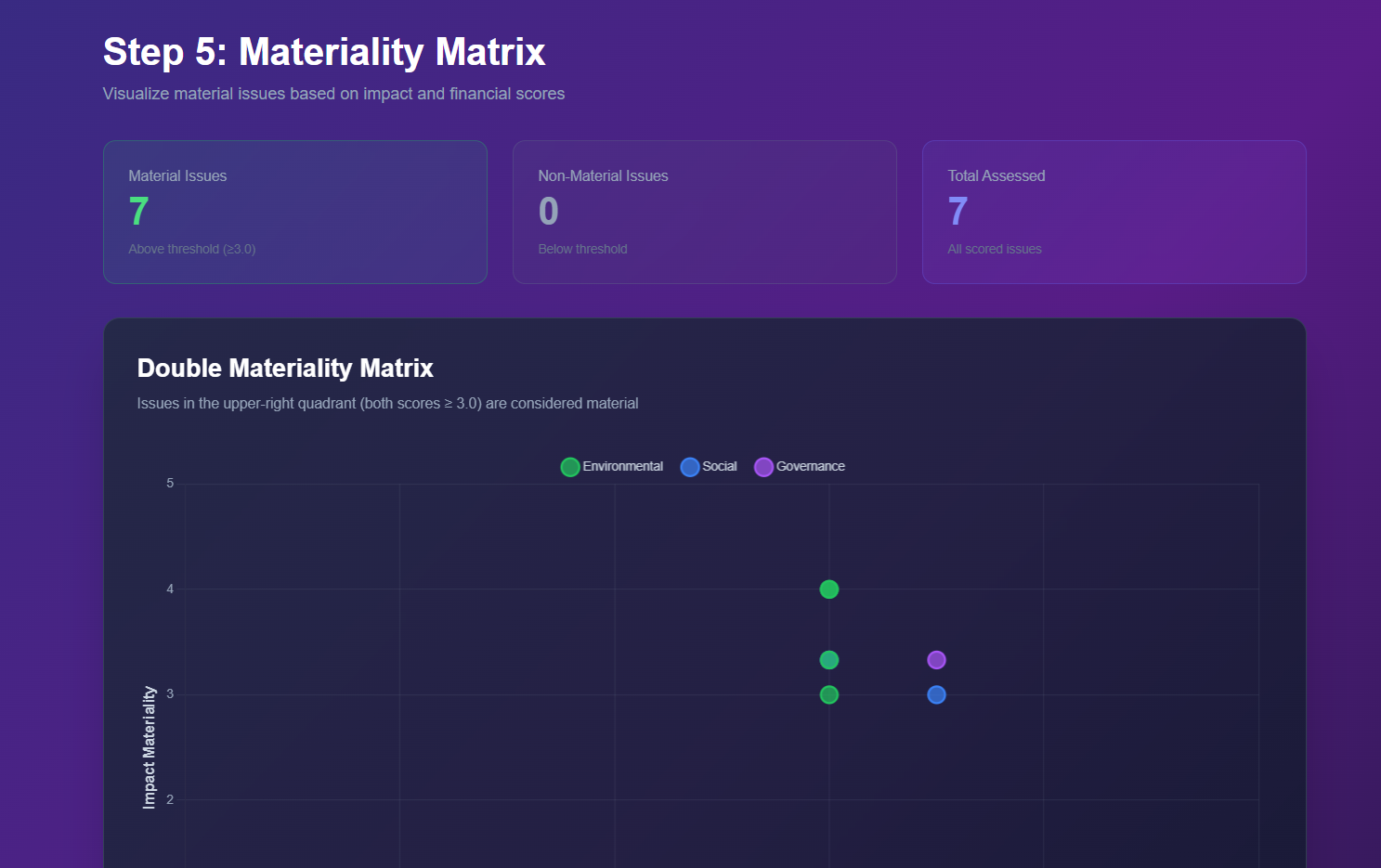
Materiality matrix
See the double materiality picture, not just a list.
- Issues plotted by impact and financial score, coloured by environmental, social or governance
- Issues above the threshold on both axes are flagged material
- Counts of material and non-material issues update as scores change
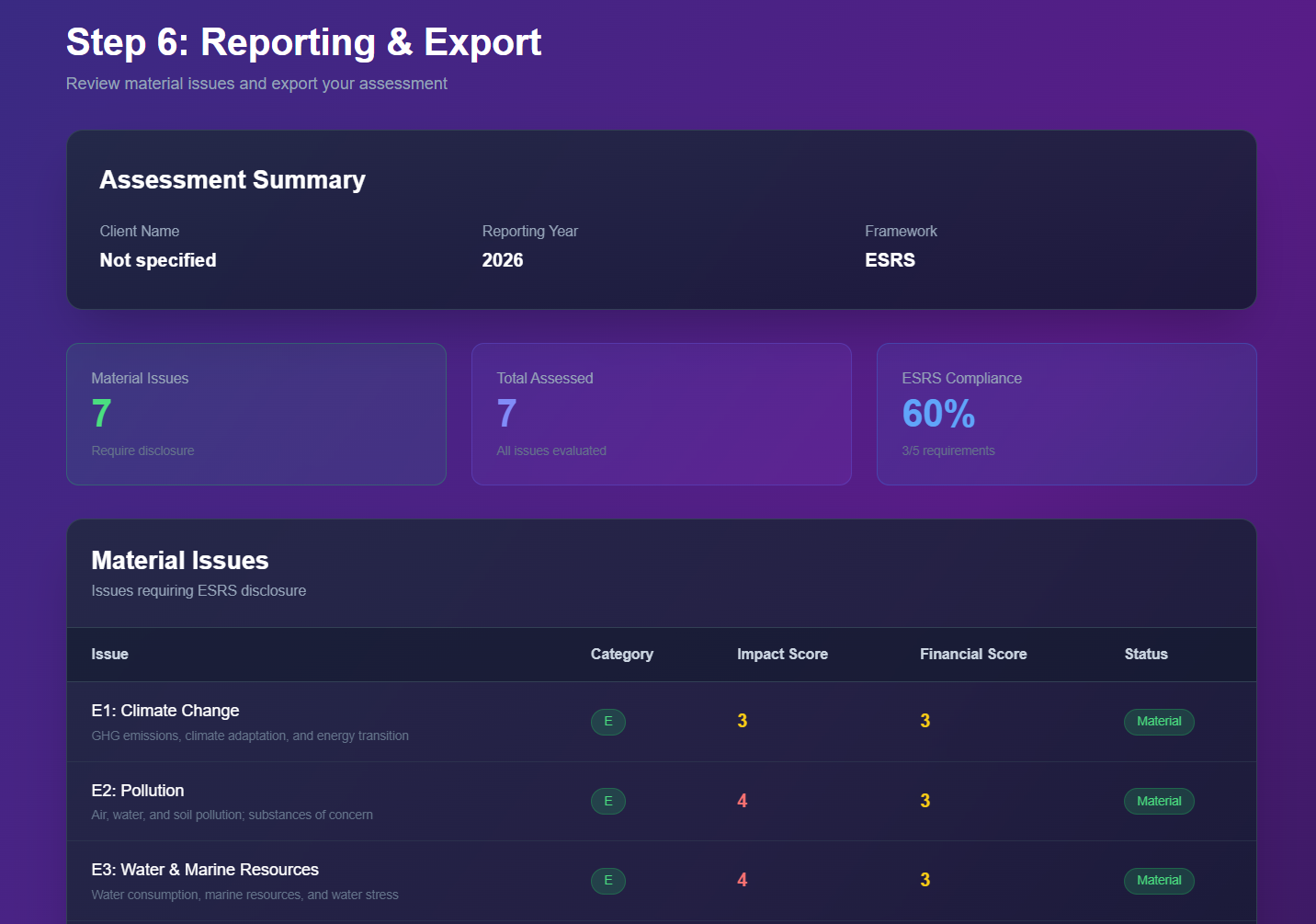
Reporting and export
Review the material issues and export the assessment.
- Assessment summary with reporting year and framework
- Material issues table with category, impact score, financial score and status
- Export for disclosure and for assurance
Faster, more defensible, more trusted.
terra-dma accelerates the assessment, combining audit-ready precision with strategic insight.
Accelerated IRO discovery
An integrated library and automated workflows identify impacts, risks and opportunities.
Collaborative stakeholder engagement
Built-in survey and interview modules centralize stakeholder feedback.
Value chain mapping
Identify impacts and risks across your value chain, not just your own operations.
Eliminate manual error
Replace fragile, error-prone spreadsheets with a standardized, logic-based framework.
Enhanced investor trust
Give stakeholders high-fidelity, transparent data that shows your ESG strategy rests on rigorous analysis.
Software, plus experienced assessors.
If you would rather not run the assessment alone, our team runs materiality assessments end to end, and terra-dma keeps the evidence.
Double Materiality Matrix
A visual, data-backed matrix of your ESG priorities.
IRO Registry
A structured record of impacts, risks and opportunities for each issue.
Stakeholder Insight Report
What your stakeholders told you, and how it shaped the scores.
Common questions.
What sustainability teams ask before running a double materiality assessment.
What is double materiality?
It looks at two directions: how your business affects people and the environment (impact materiality), and how sustainability issues affect your finances (financial materiality). An issue that is material on both lenses is a priority.
What are IROs?
Impacts, risks and opportunities. For each sustainability issue you identify the relevant IROs, then score them on impact and financial materiality.
Which topics can we assess?
The workflow is organised around ESRS topics, such as climate change, pollution, water, biodiversity, own workforce and affected communities, and you can add custom issues for topics specific to your business.
How do we capture stakeholder views?
You map stakeholder groups, record how you engage each one, such as surveys, interviews or workshops, and prioritize them. Built-in survey and interview modules centralize the feedback.
Do we have to do a double materiality assessment?
It is the basis for ESRS reporting under the EU CSRD, whose scope has been narrowed by the EU Omnibus changes, so whether it is required depends on your size and EU footprint. Many organisations run one voluntarily to focus their ESG strategy. We can confirm what applies to you.
Let’s map what matters most to your business.
Tell us where you are with materiality today, whether starting a first assessment or replacing spreadsheets, and we will arrange a demo and suggest next steps.